
Public cross collection
A visitor place with a public point, such as a parish church cross house. It is not permission to enter outside opening times.
Uncertainty area
A broad area around a historic context. The circle is uncertainty, not the original position of a stone.
Withheld findspot
A modern find whose location an official source keeps confidential. The atlas adds no geometry.
Rule without a pin
A care rule, such as taking no rubbings, discussed for how to look after the stones rather than where they stand.
A symbol is not permission
This article describes carved stone crosses kept in churches, cross houses, churchyards and the Manx Museum. It does not grant access, metal-detector consent, an excavation licence or permission to touch, rub, move or photograph a stone where the keeper asks you not to. Follow opening times and any notices on site.
Where to see Manx crosses at a glance
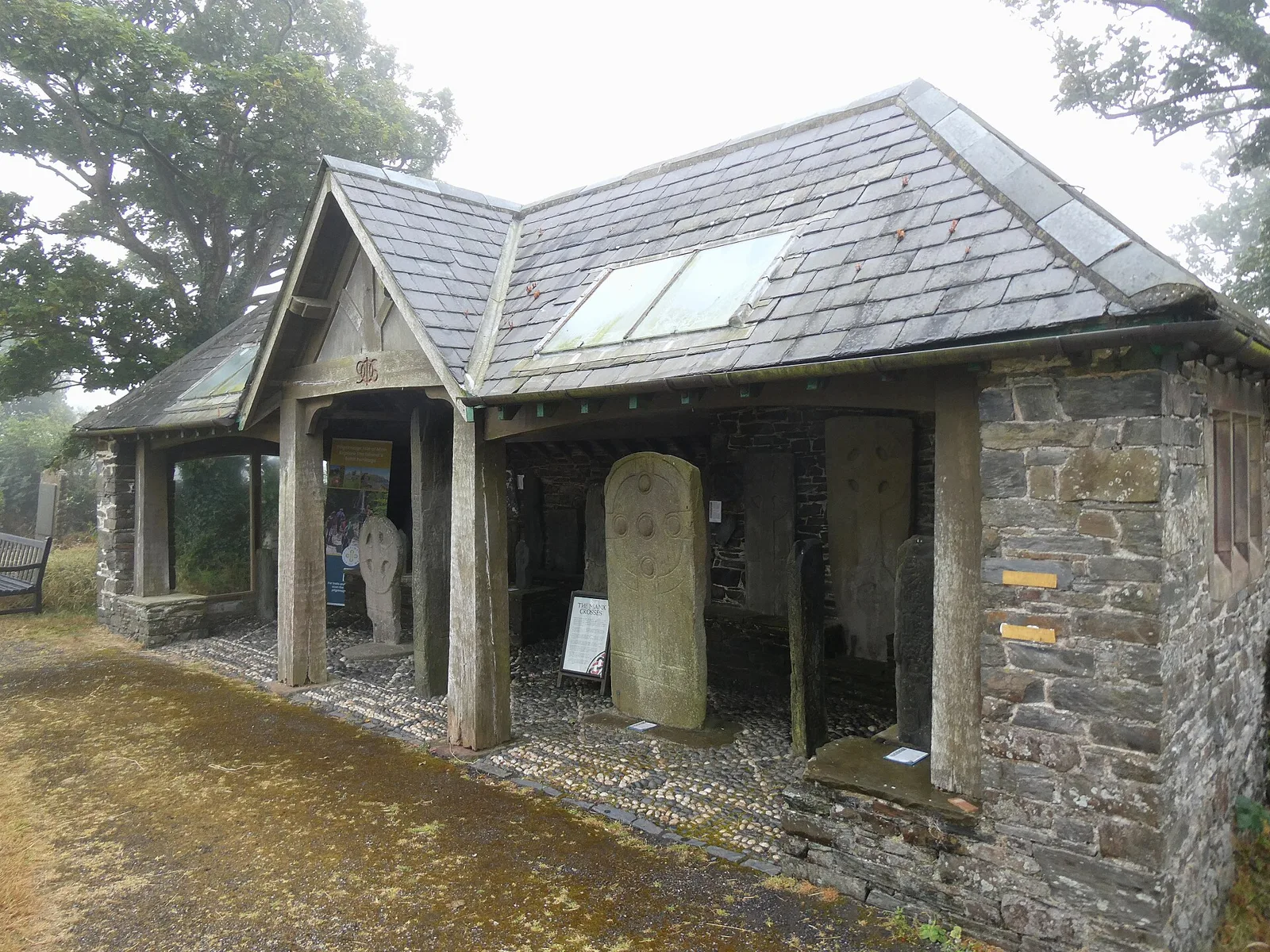
The best single place to see the crosses is the cross house at Kirk Maughold, which holds 38 stones, the largest collection of any parish (Manx National Heritage, Isle of Man carved stone cross collection).
Others stand in or beside the churches at Andreas, Bride, Jurby, Kirk Michael, Malew, Santon and Onchan, at the old churches of Braddan, Lonan and Marown, and in the Manx Museum in Douglas. Look closely, but don't touch, rub or climb on them.
What the Manx crosses are
The crosses span the early Christian and Viking periods. According to Manx National Heritage, the earliest are simple Celtic stones, some inscribed in Ogham, an early Celtic script. Later crosses were carved after Norse settlers arrived. These mix Christian imagery with scenes from Norse mythology, and many carry runic inscriptions (Manx National Heritage).
Some crosses still stand in the churchyards and fields where they were found. Many others were moved into churches and purpose-built cross houses or shelters to protect them, and some are in the Manx Museum.
Several cross sites, Maughold among them, also have the remains of keeills. Our guide to what a keeill is explains those small early chapels.
How the crosses came to be studied and protected
Much of what we know comes from the work of P.M.C. Kermode, who later became the first Director of the Manx Museum. In 1906 he made large-scale drawings and casts of some of the crosses. The Maughold cross house, designed by the architect Armitage Rigby, was built in the same year, and Kermode's book Manx Crosses followed in 1907.
A second cross house, at Lonan, holds a smaller collection. Manx National Heritage notes that both cross houses are owned and managed by their parishes, and that MNH does not own the crosses in Manx churches but acts as their guardian (Manx National Heritage, Manx Crosses at Maughold).
The research has continued. MNH funded Sir David Wilson's 2018 book Manx Crosses: A Handbook of Stone Sculpture and supported The Runic Inscriptions of the Isle of Man (2019), the catalogue of the runic inscriptions produced by a team led by Professor Michael Barnes.
MNH also commissioned Lancaster University to make a 3D digital survey of all the crosses, so their condition can be monitored. An early comparison between new scans of one Maughold cross and a mould taken from it in 1905 showed no discernible losses.
Maughold: the best place to start
Kirk Maughold, in the north-east of the island, is the place to see the most crosses in one visit. Manx National Heritage describes it as a site of early Christian crosses with the ruins of four keeills in the churchyard. Its cross house holds 38 stones, the largest sculpture collection of any parish (Manx National Heritage).
The cross house holds early Christian and Norse stones side by side, so you can compare plain early crosses with the busier Viking-age carving. Visit Isle of Man says it holds almost a third of the island's pre-Norse cross slabs, including the Pillar Cross (Visit Isle of Man, Kirk Maughold Church).
MNH says Maughold has the only known Manx parish cross, which carries the earliest known carving of the three legs of Man. Later memorials include a First World War memorial by Kermode and an obelisk to the novelist Hall Caine. Visit Isle of Man describes a large churchyard of nearly four acres, and St Maughold's well is nearby.
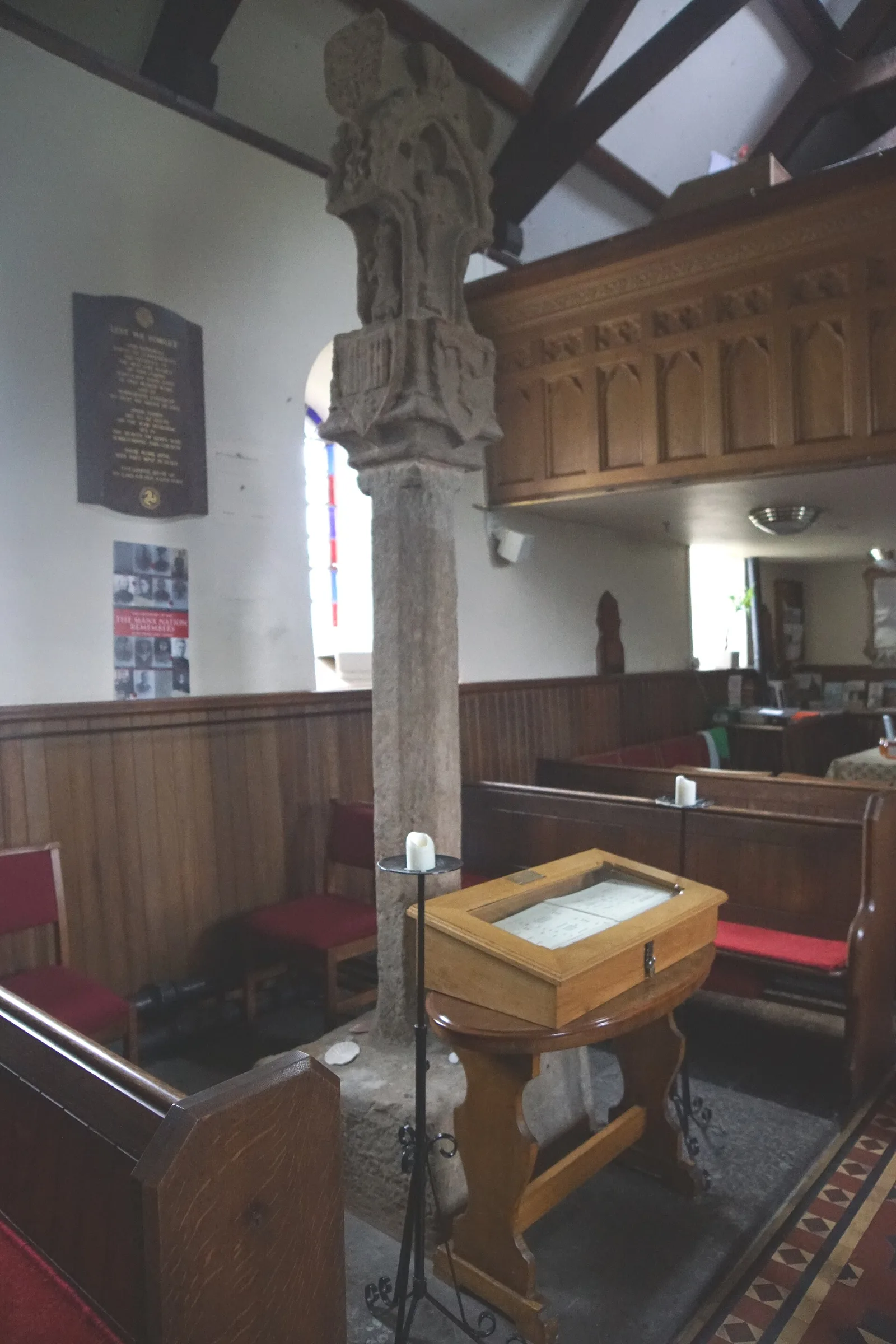

Visit Isle of Man gives the drive as about 40 minutes from Douglas, or about 10 minutes from Ramsey via the A2, with free parking. Bus route 16 runs between Ramsey and Maughold; check the current Isle of Man Bus and Rail timetable before you go.
Visit Isle of Man lists the church as open from 09:00 to 16:00 daily, with toilets on site. Remember it is a working parish church, so check before visiting during a service or funeral.
Other places to see Manx crosses
Manx National Heritage lists crosses at these parish churches and old church sites. In the north there are collections at Andreas, where the atlas has an Andreas Church cross slab entry, at Bride, and at Jurby in the north-west. In the west, Kirk Michael includes Gaut's Cross.
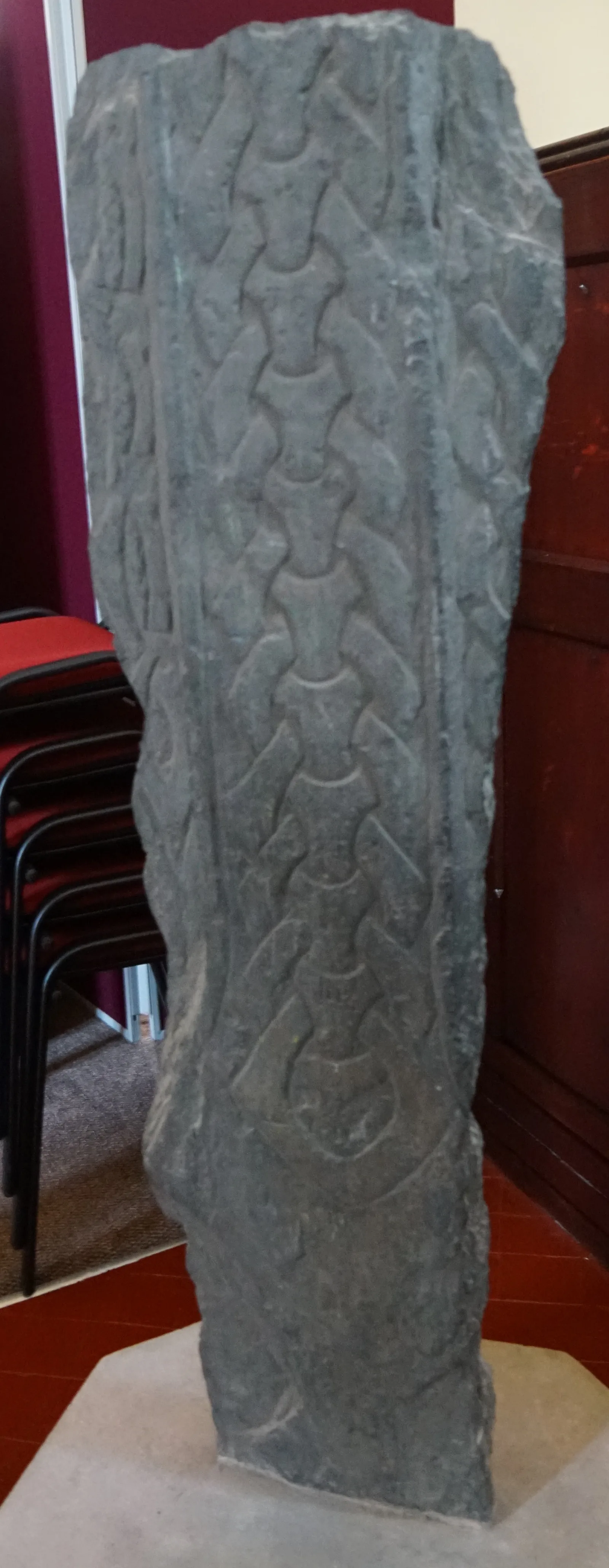

Near Douglas, Old Kirk Braddan has its own atlas entry. In the east, Lonan Old Church has its own cross house, and Onchan has a parish church collection. Marown old church sits in the centre of the island, Santon in the south-east and Malew in the south, and the Manx Museum in Douglas holds stones in the national collection.
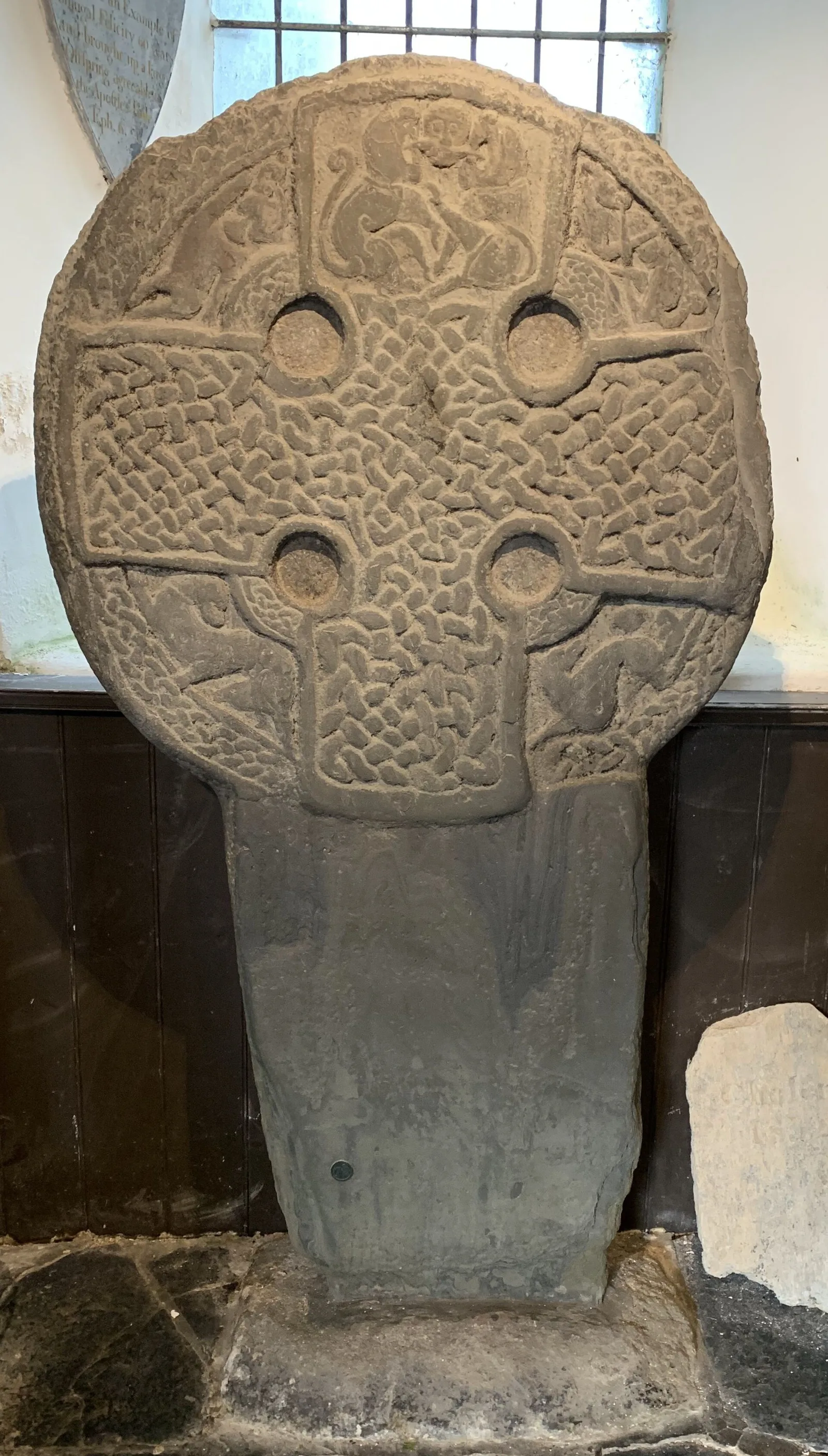

Access varies from place to place. Some churches are open in daylight, some only at set times, and some stones are outdoors in the churchyard. If you're planning a winter trip, see our list of Manx heritage sites open in winter.
Seeing the crosses from home
Manx National Heritage has published 3D models of many of the crosses in its Manx crosses collection on Sketchfab. You can turn a stone round and pick out carving that is hard to see on site in flat light.
It is worth a look before a visit so you know what to look for, and it lets you study a stone in detail without adding wear to the carving itself.
How to look after the stones
MNH lists the main risks to the crosses as bird droppings, algae, rubbings, vandalism and theft (Manx National Heritage, Manx Crosses at Maughold). Visitors can help with the ones in their control.
Don't take rubbings: paper, wax and chalk wear away fine carving over time, so take a photo instead. Don't touch the carved faces, and don't lean bikes or bags against the stones.
Use low, raking light for photos. Early morning or late afternoon light, or a torch held to one side, shows the carving far better than flash.
Leave everything as you find it; our guide to ancient monuments on the Isle of Man explains how the island protects its historic sites. If you see fresh damage, tell Manx National Heritage.
Primary and official evidence
Sources checked for this guide
Access dates record the evidence reviewed for this edition. Follow the current official material before relying on a rule or reporting route.
- Manx National Heritage: Isle of Man carved stone cross collectionCollection overview, the Maughold cross house count and the list of parish church and old church cross sites. Accessed .
- Manx National Heritage and the Manx Crosses at MaugholdHistory of the cross houses, guardianship, research, the 3D survey and the main risks to the stones. Accessed .
- Visit Isle of Man: Kirk Maughold ChurchVisitor details for Maughold including opening hours, parking, travel times and the churchyard. Accessed .
Questions readers ask
Marker, circle and withheld-location FAQ
Where is the best place to see Manx crosses?
Kirk Maughold. Its cross house holds 38 stones, the largest collection of any parish on the island, alongside the parish cross and the remains of four keeills in the churchyard.
Where else can I see Manx crosses?
Manx National Heritage lists crosses at the churches of Andreas, Bride, Jurby, Kirk Michael, Malew, Santon and Onchan, at the old churches of Braddan, Lonan and Marown, and in the Manx Museum in Douglas.
When can I visit Kirk Maughold?
Visit Isle of Man lists the church as open from 09:00 to 16:00 daily, with free parking. It is a working parish church, so check ahead if you're planning a visit around a service.
Where can I read more about the runic inscriptions?
The Runic Inscriptions of the Isle of Man, published in 2019 by the Viking Society for Northern Research and produced by a team led by Professor Michael Barnes, is the detailed catalogue.
Can I take a rubbing of a Manx cross?
No. Manx National Heritage lists rubbings among the risks to the stones, because paper, wax and chalk wear away fine carving. Photograph them instead.
Use the framework
See the early chapels beside the crosses
Several cross sites, Maughold among them, also keep the remains of keeills. Read what a keeill is and where the best surviving examples can be seen from public paths and churchyards.